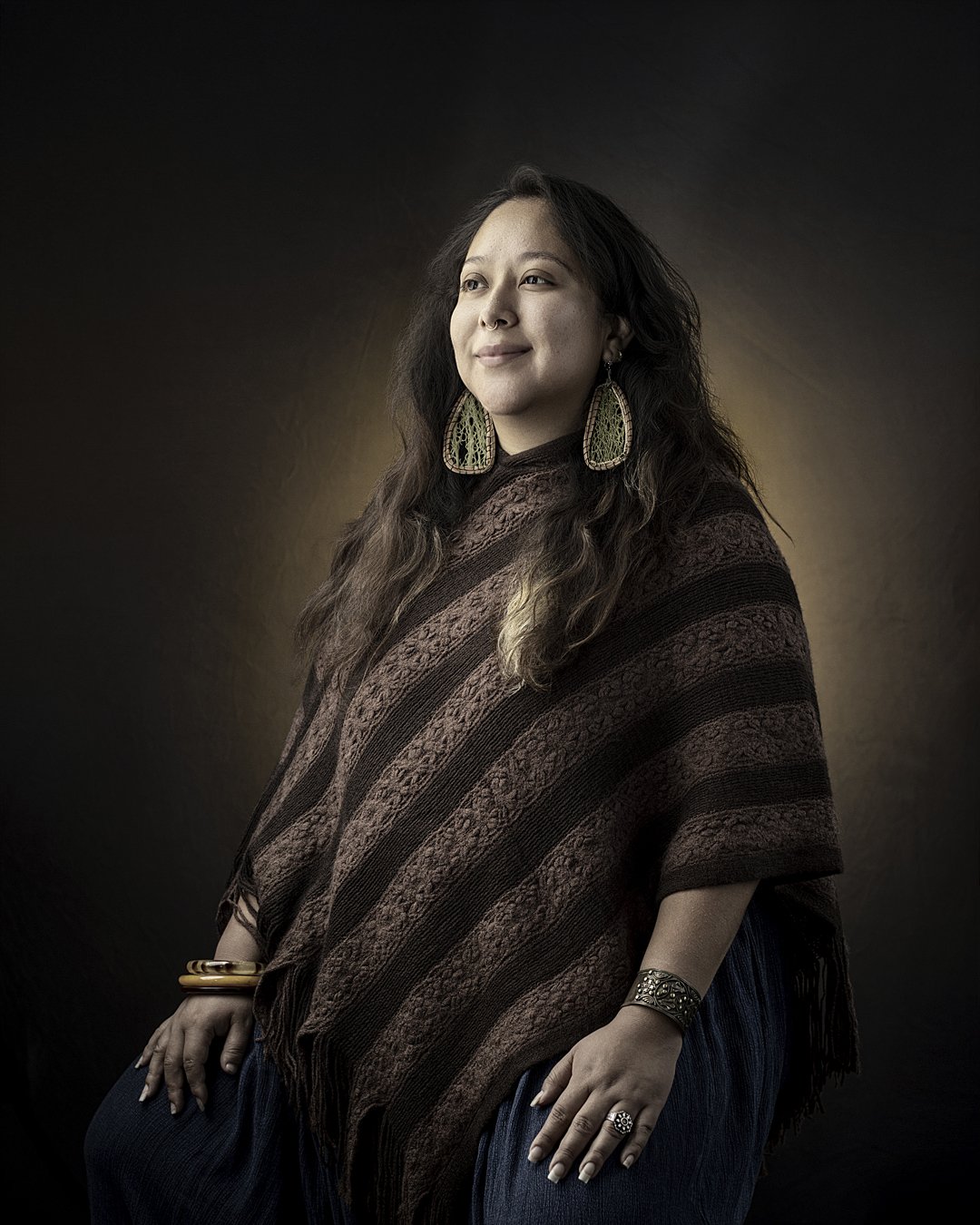
A Portrait Begins Before the Camera Comes Out
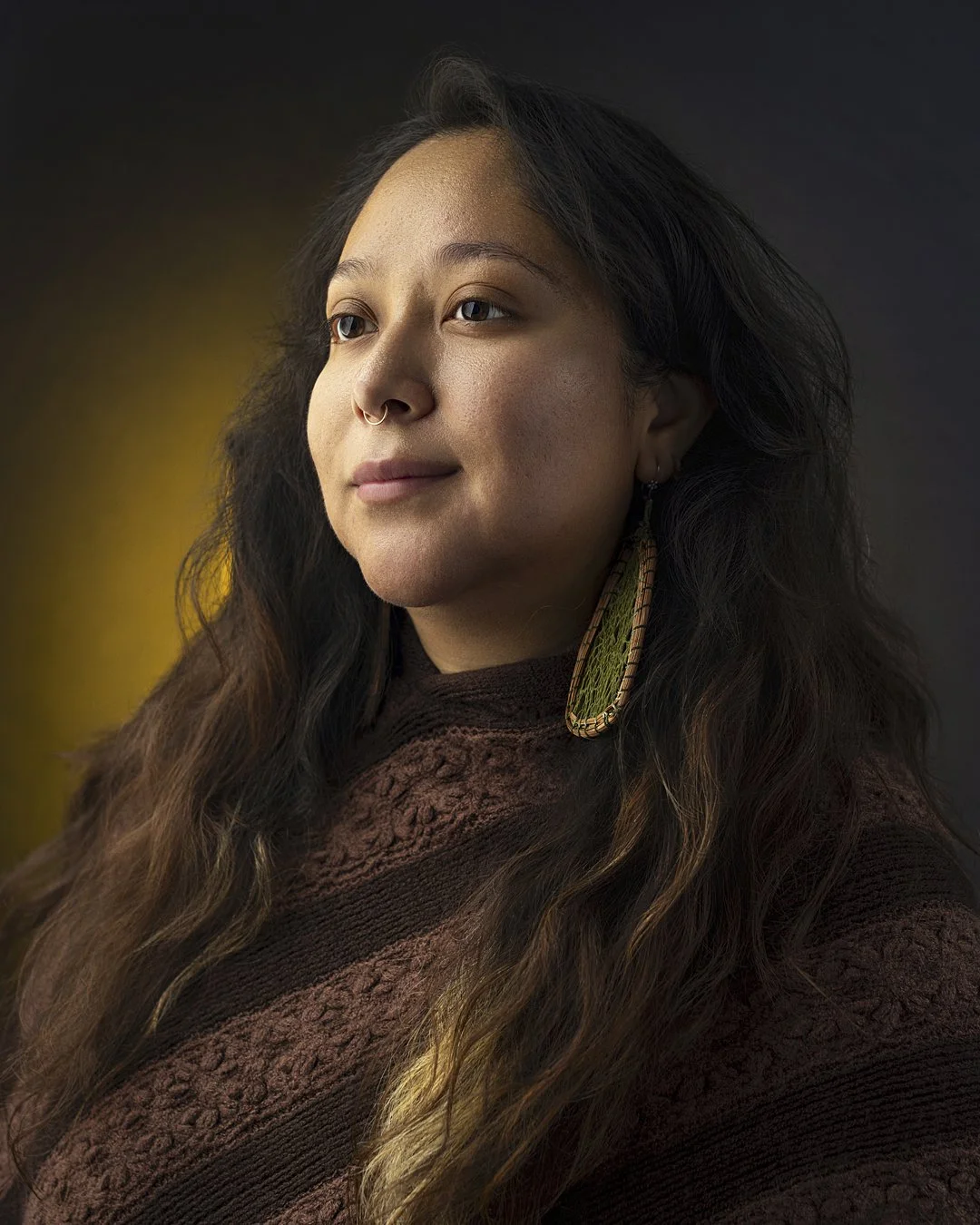
Last week, Jacky and I met at the Boston Bean (called Maynard’s Living Room by a few of my business neighbors) to talk about being photographed.
And we talked.
Not about poses. Not about which side was her “good side.” We talked about family. About her mother. About her family in Mexico, and particularly about a grandmother she never had the chance to meet, but nevertheless feels deeply connected to.
Jacky described her grandmother as kind and resilient.
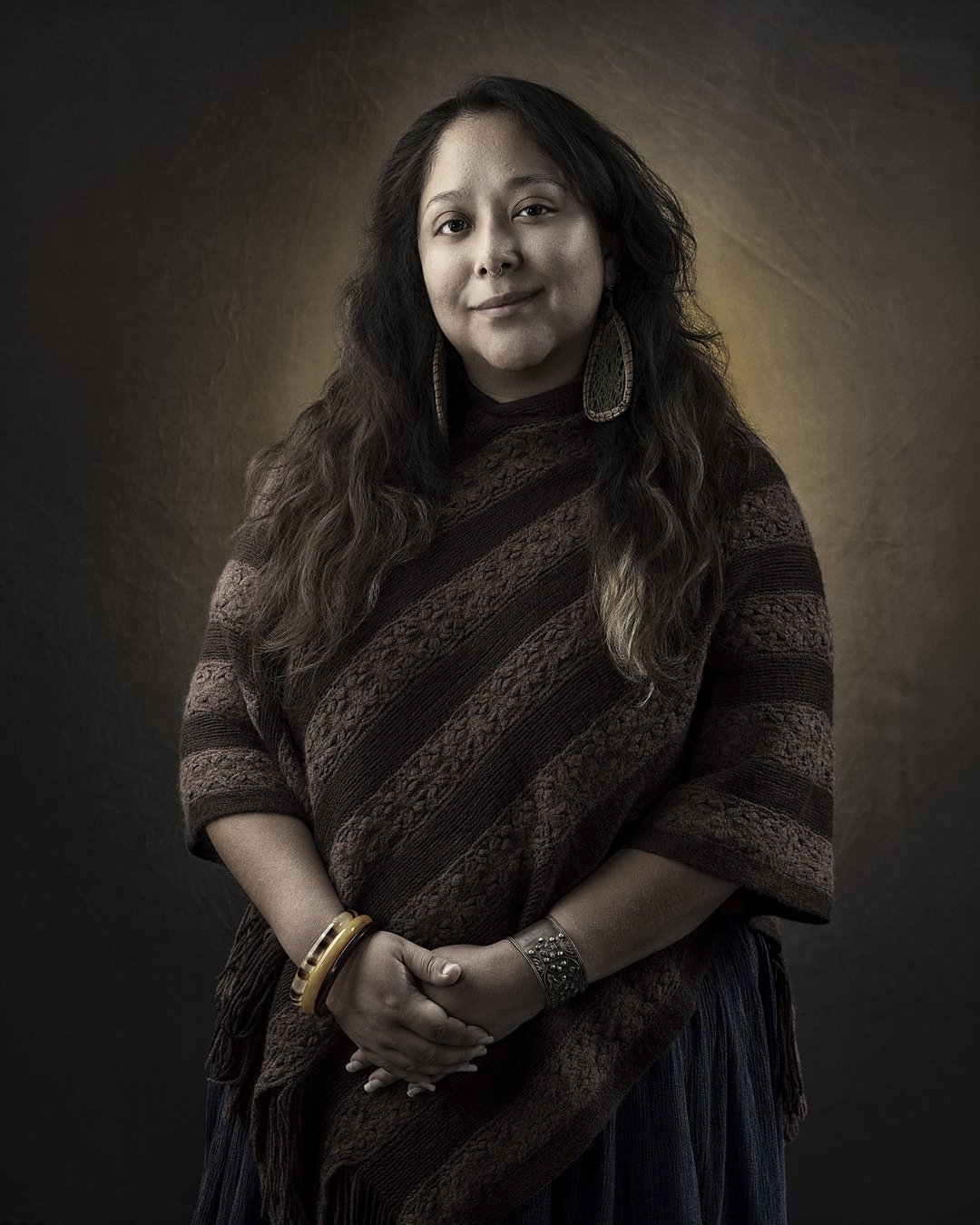
As we talked, I began to see those same qualities in the woman sitting across from me. Even the clothing Jacky had chosen seemed to carry something from another time. I started wondering what would happen if, rather than simply making a beautiful portrait of Jacky today, I photographed her as though she could have stood beside her grandmother.
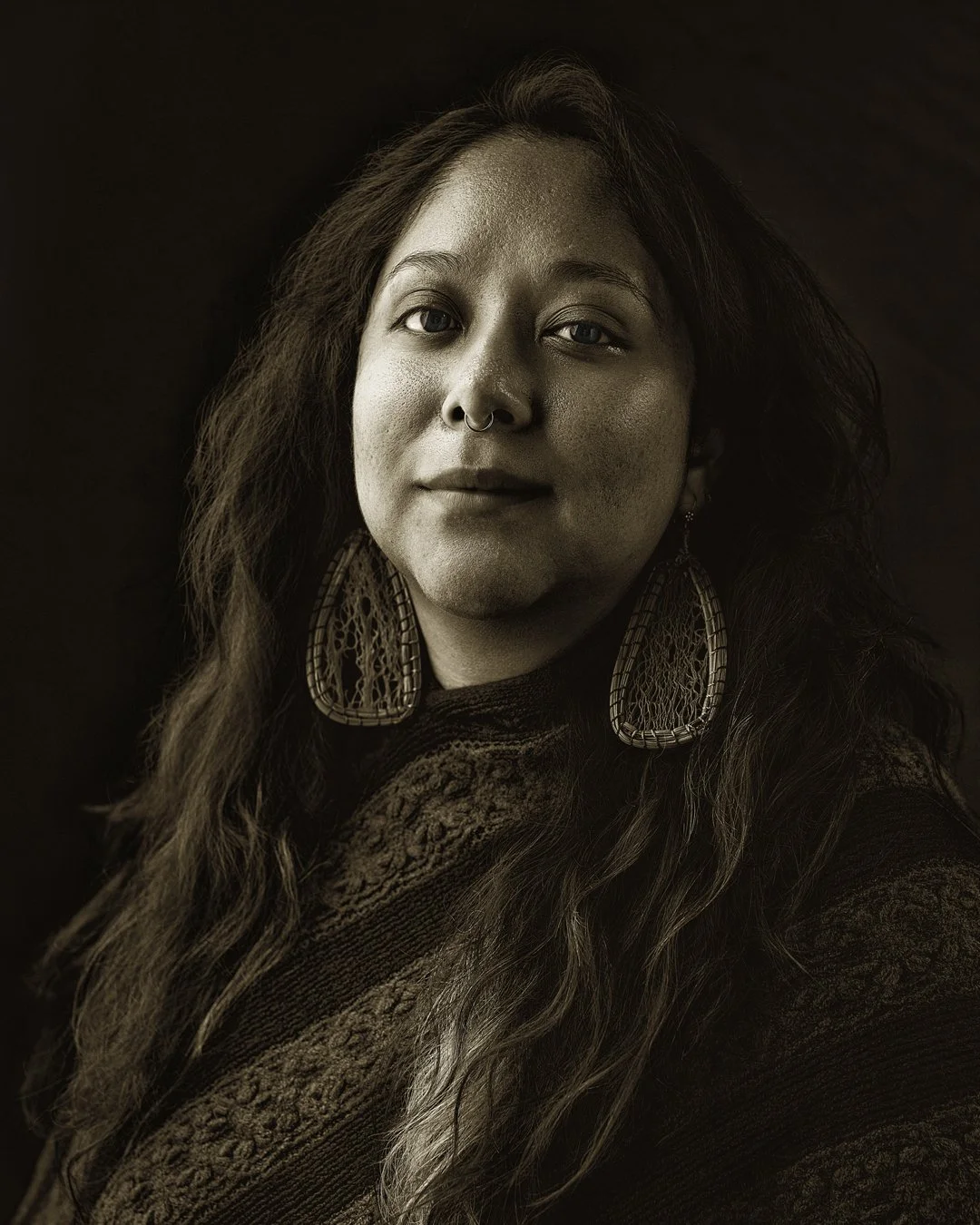
Connection.
That thought led me toward the historic portraiture I’ve admired in the work of Edward S. Curtis and in the Native American photographs collected by Kurt Koegler: deliberate poses, large-format cameras, restrained expressions, beautiful tonal depth, and photographs that seem to ask you to spend a little time with the person pictured.
Curtis photographed Indigenous peoples extensively around the turn of the twentieth century; the Library of Congress collection alone contains roughly 2,500 of his photographs. His legacy is complex, but the visual power of the portraiture remains undeniable.
I wanted some of that gravity in Jacky’s photographs.
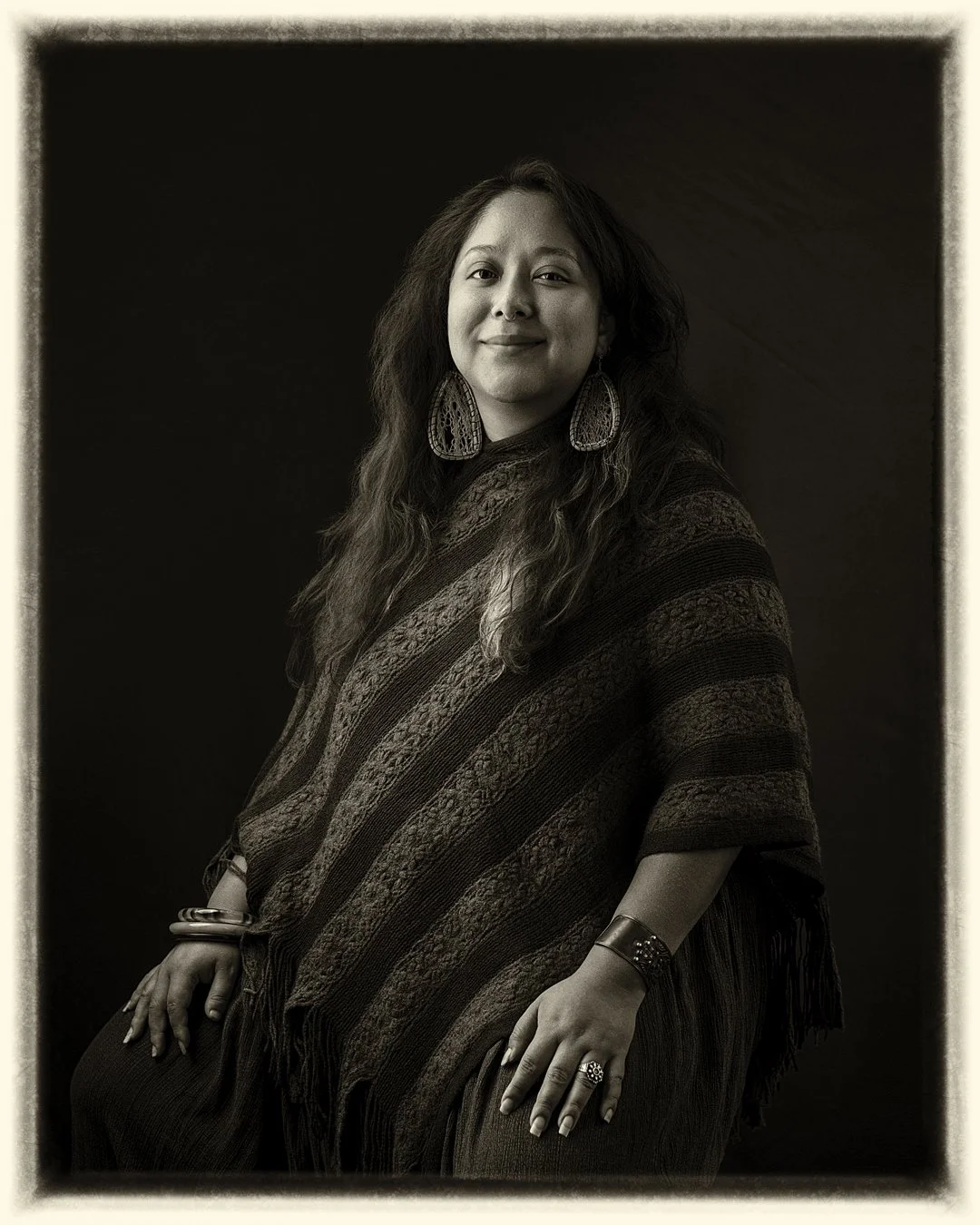
Presence.
And this is exactly why I believe a portrait session should begin with a conversation.
You can hire someone who knows where to put a light and how to operate a camera. Those skills matter, and I’ve spent years learning them. But the photographs I care about require something more.
Trust.
I need to know something about you.
What matters to you? Where did you come from? What makes you laugh? What have you survived? Who are you becoming? What parts of yourself do you hope the people who love you will recognize in a photograph?
My job isn't simply to make you look good. I'm very good at making photographs, but technique is only useful if I know what we're trying to say.
That requires collaboration. It requires listening. And it requires trusting your photographer enough to let the session wander somewhere you might not have expected.
Jacky and I started with a conversation about her grandmother.
We ended up, I think, with photographs that somehow contain a little bit of her.
And if you want a portrait that feels like more than simply a record of what you look like, perhaps we should start with a conversation, too.